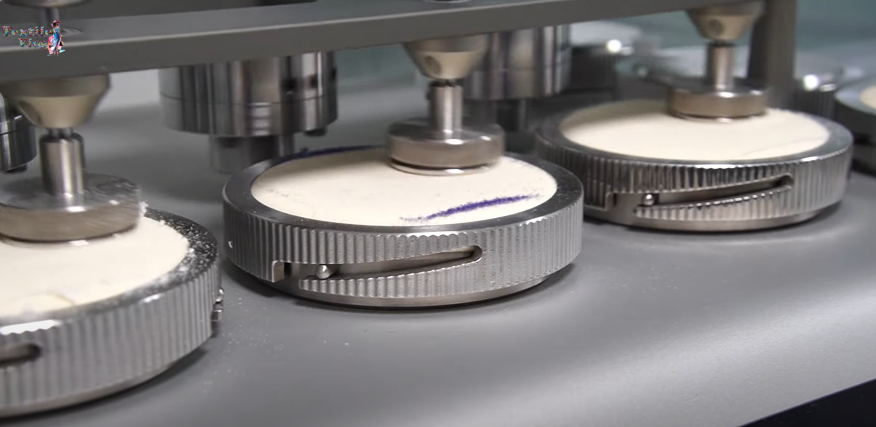
In the global textile market, the “first touch” and “first look” of a garment often determine a consumer’s purchasing decision. However, the true test of a fabric’s quality occurs after weeks of wear. One of the most common and frustrating defects in apparel—especially in knitwear and synthetic blends—is the development of pills. These are the small, tangled clusters of fibers that form on the surface of a fabric due to friction. To combat this, high-end laboratories rely on the Martindale Pilling Tester. By using a specialized Pilling Tester Machine, manufacturers can simulate months of physical interaction in a matter of hours, allowing them to refine their materials before they hit the mass market.
The Mechanical Evolution of the Pilling Tester Machine
The Pilling Tester Machine is a sophisticated evolution of the standard abrasion tester. While both use the Martindale method, the pilling evaluation requires a distinct mechanical setup. In a standard Martindale Pilling Tester, the specimen undergoes a Lissajous motion—a complex, multi-directional rubbing pattern. This motion is critical because human movement is never linear; when we move, our clothes rub against themselves and other surfaces in various directions.
Unlike abrasion testing, which uses a rough wool abradant to wear a hole in the fabric, the Pilling Tester Machine typically rubs the test specimen against a standard felt or even against another piece of the same fabric. The stroke length is significantly shorter (usually 24mm), and the pressure is much lighter. This specific configuration is designed to coax loose fibers to the surface, where they eventually tangle into pills. The precision of the Martindale Pilling Tester ensures that these conditions are perfectly repeatable, which is essential for consistent quality control across different production batches.
Operational Procedures and Standard Compliance
To achieve valid results, a Pilling Tester Machine must be operated under strict international standards, such as ISO 12945-2 or ASTM D4970. The process begins with meticulous sample preparation. Technicians cut circular specimens from the fabric, ensuring they are free from wrinkles or pre-existing surface defects. These samples are then conditioned in a standard atmosphere of 20°C and 65% relative humidity.
Once the Martindale Pilling Tester begins its cycle, the machine runs for a set number of rotations—typically 500, 1,000, 2,000, or 5,000 cycles. At each interval, the specimens are removed for visual assessment. This assessment is conducted in a specialized viewing cabinet using “grazing light” to highlight the surface irregularities. The technician compares the samples against a set of five standard photographs. Grade 5 represents “no change” (excellent resistance), while Grade 1 represents “dense surface pilling” (poor resistance). This standardized grading allows the Pilling Tester Machine to provide a universal language of quality that suppliers and retailers can both understand.
Innovation in Pilling Testing Technology
The introduction of the ChiuVention Smartindale has revolutionized how labs utilize the Martindale Pilling Tester. Traditional machines often required significant manual labor to change samples and adjust weights. The Smartindale, however, features a “one-touch” design where the guide plate can be lifted easily, allowing for rapid specimen changes. Furthermore, this Pilling Tester Machine utilizes a patented digital algorithm to drive its dual servo motors. This eliminates the mechanical “drift” often found in older gear-driven models, ensuring that the Lissajous pattern remains perfect throughout the entire test duration.
In a high-volume manufacturing environment, efficiency is paramount. A 9-head Martindale Pilling Tester allows a lab to test multiple variations of a fabric blend simultaneously. For example, a developer might test three different yarn twists and three different finishing treatments at once. This parallel testing capability, combined with the machine’s ability to connect to a smartphone app for remote monitoring, makes the modern Pilling Tester Machine an indispensable tool for rapid research and development.
Conclusion: Safeguarding Brand Reputation
Ultimately, the Martindale Pilling Tester is an investment in brand reputation. A single poorly performing product line can lead to thousands of returns and permanent damage to a brand’s image. By integrating a rigorous testing phase using a high-quality Pilling Tester Machine, companies can guarantee that their products will remain smooth and aesthetically pleasing even after heavy use. Whether it is a luxury cashmere sweater or a high-performance polyester sports jersey, the data provided by the Martindale Pilling Tester ensures that the consumer receives exactly what they paid for: a durable, high-quality textile that stands the test of time.
